
Huntington Beach Genealogy and Vital Records
Huntington Beach genealogy records document family histories through vital records maintained by Orange County and local historical collections at the Huntington Beach Public Library. Birth certificates, death records, and marriage licenses for Huntington Beach residents are processed by the Orange County Clerk-Recorder office. The city developed from an oil boom town in the early 1900s to a beach resort community and modern suburban city. Local archives, library collections, and cemetery records provide context for tracing Huntington Beach families through multiple generations of California history.
Huntington Beach Genealogy Quick Facts
Huntington Beach Vital Records Access
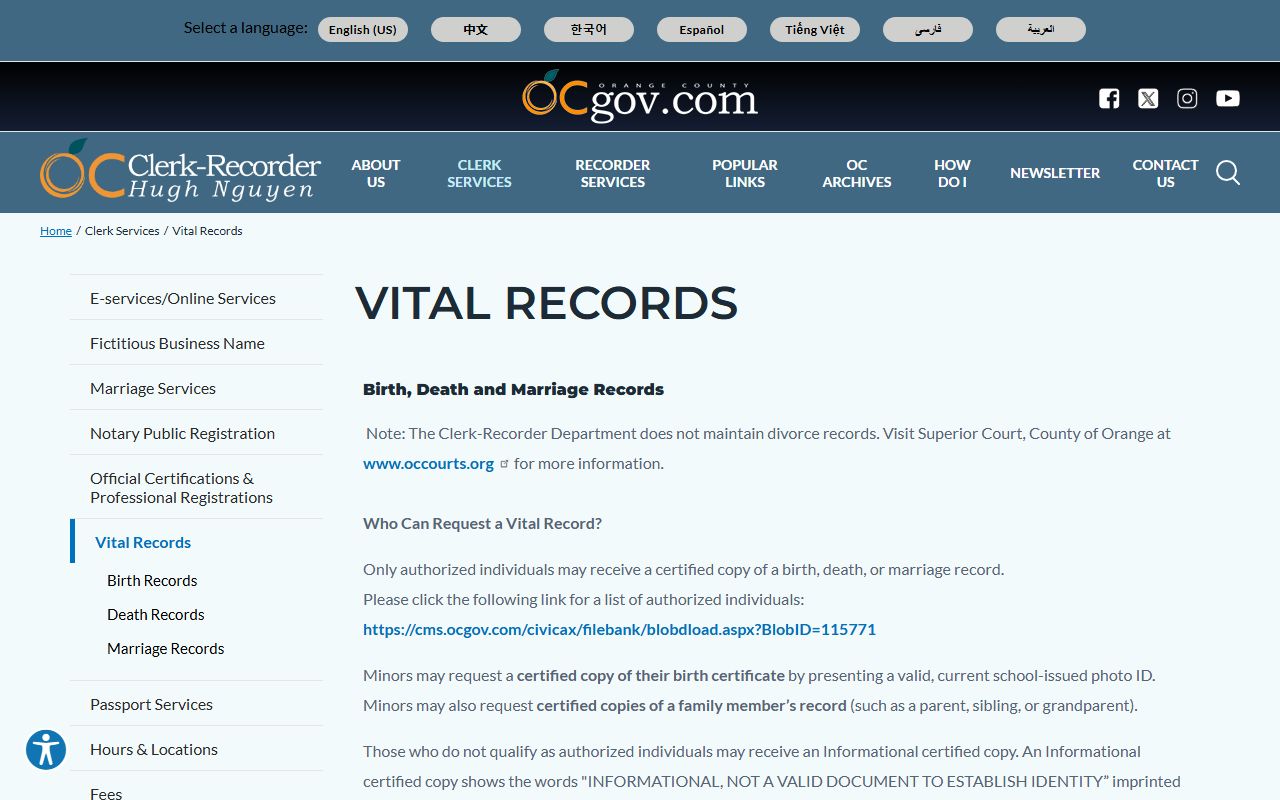
All vital records for Huntington Beach are maintained by Orange County, not by the city government. The Orange County Clerk-Recorder office processes all requests for birth, death, and marriage certificates for events that occurred in Huntington Beach. Contact the Orange County vital records office to order copies.
Orange County accepts vital records requests online, by mail, or in person at the Old County Courthouse in Santa Ana. Birth certificates cost thirty one dollars. Death certificates cost twenty six dollars. Marriage certificates run nineteen dollars. Processing times vary from same day service for walk-in requests to two weeks for mail applications. Online orders through the county portal include convenience fees but process faster than mail requests.
For genealogy research, order informational copies rather than certified copies. Informational copies do not require notarized statements and work fine for family history documentation. They cost the same as certified copies but arrive faster because you skip the notarization step. Only close relatives need certified copies for legal identity purposes.
Marriage licenses are kept by the county where they were issued, not where ceremonies occurred. If ancestors married in Huntington Beach but obtained their license in Los Angeles County, you must request the record from Los Angeles County. This matters for marriages from the early 1900s when couples often traveled to different counties for beach weddings.
Orange County Archives Research
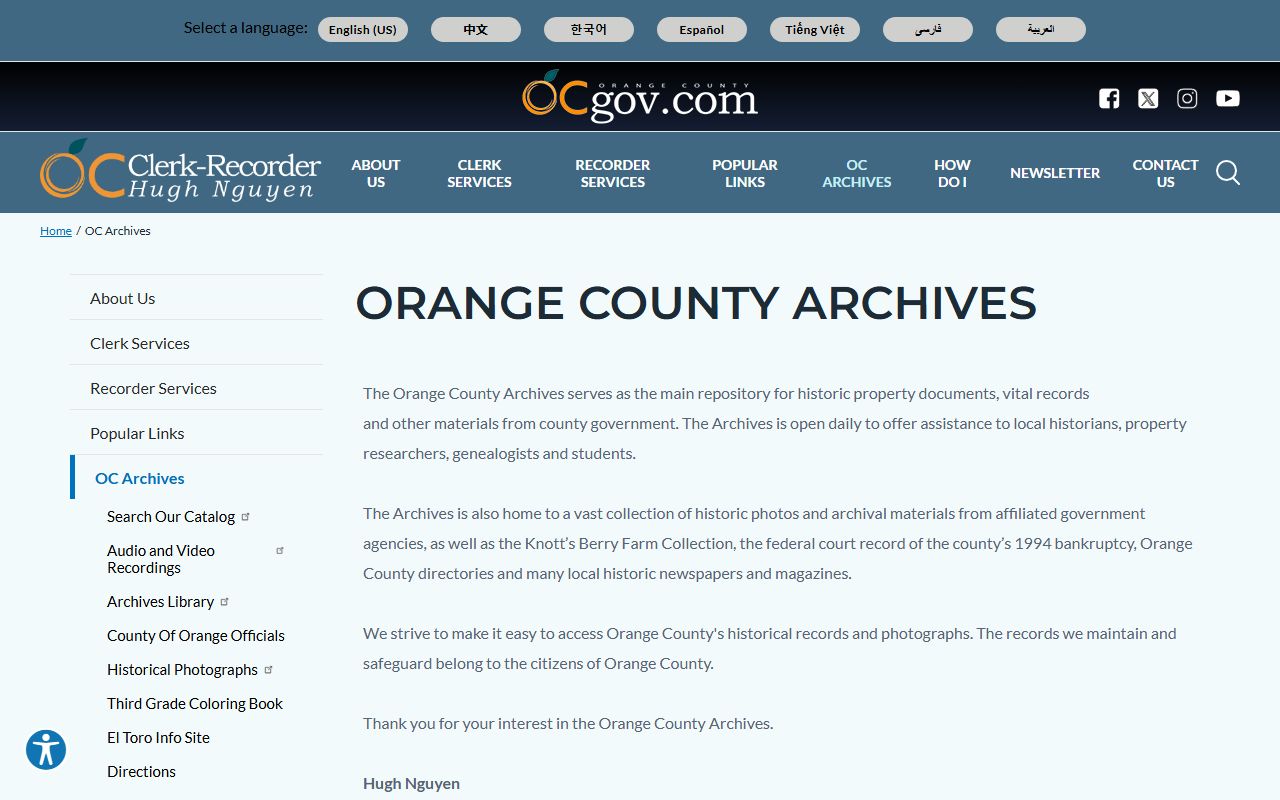
The Orange County Archives holds historical records for Orange County including Huntington Beach area materials. The archives preserve court records, land documents, naturalization files, probate records, and photographs documenting county development. Genealogists can access these collections to supplement vital records with additional family history details.
County naturalization records from the late 1800s and early 1900s document immigrants who became United States citizens through Orange County courts. These records include birth dates, birthplaces, arrival information, and family details. Many Huntington Beach residents came from other countries to work in the oil fields or establish businesses during the city's growth period.
Probate files provide information about deceased persons' property, heirs, and family relationships. When someone died owning real estate in Orange County, probate court records list all legal heirs with their relationships to the deceased. These files often name relatives not mentioned in other records and establish family connections across multiple generations.
Land records trace property ownership changes over time. Early Huntington Beach land transactions show who bought lots when the Pacific Electric Railway opened the area for development. Deed records include purchaser names, seller names, property descriptions, and transaction dates. Following land transfers helps identify when families moved to Huntington Beach and where they lived.
Huntington Beach Public Library Local History
The Huntington Beach Public Library maintains local history materials including city directories, photographs, maps, newspapers, and vertical files about Huntington Beach families and institutions. The library's History Center preserves documents and artifacts related to the city's oil boom era, beach resort development, and suburban growth. Researchers can access these materials during library hours.
City directories from the 1910s through recent decades list Huntington Beach residents with addresses and occupations. These directories track families over time and show neighborhood development patterns. The library holds directories in various formats including original volumes and microfilm copies. Some years have more complete directories than others depending on economic conditions and publisher activity.
Local newspapers include the Huntington Beach News and other publications. Obituaries provide death information beyond what appears on death certificates. Marriage announcements, birth notices, and society columns document family events. News coverage of oil industry developments, beach activities, schools, and civic organizations places ancestors in community context. Library staff can help locate specific articles and obituaries.
The library's photograph collection includes images of early Huntington Beach oil derricks, the pier, beach scenes, businesses, and residents. Some photographs identify people and locations while others require research. Historical photographs help visualize the places where ancestors lived and worked. The library can provide copies of photographs for family history projects.
Huntington Beach Historical Society
The Huntington Beach Historical Society operates the Newland House Museum and preserves records about local history. Society collections include business records, organization files, oral histories, and research materials documenting city development. Genealogists can find information about ancestors who participated in early Huntington Beach civic life, businesses, schools, and churches.
The 1920 oil discovery transformed Huntington Beach from a small farming and beach community to a booming oil town. Thousands of workers arrived to work in the oil fields. Employment records, company documents, and union files help trace families who came for oil industry jobs. City directories from the 1920s show the rapid population growth during the boom years.
Cemetery records supplement death certificates with burial location information. Huntington Beach has several historic cemeteries including Good Shepherd Catholic Cemetery and Westminster Memorial Park. Cemetery office records provide burial dates, plot locations, and family information. Some cemetery records are maintained by individual cemeteries while others have been transcribed by genealogical societies.
Tips for Huntington Beach Genealogy Research
Huntington Beach incorporated in 1909, so records before that date appear under general Orange County sources rather than city-specific collections. The area was sparsely populated before the Pacific Electric Railway made beach access easier in the early 1900s. Check Anaheim and Santa Ana newspapers for mentions of early Huntington Beach area residents before local newspapers began publication.
The oil boom brought diverse populations to Huntington Beach. Mexican workers, European immigrants, and internal migrants from other U.S. states all arrived seeking work. Ethnic church records, ethnic newspapers, and community organization files help trace families from specific backgrounds. The Huntington Beach oil fields operated from 1920 through the mid-1900s before most wells were capped or removed.
Post-World War II suburban development changed Huntington Beach from an oil and beach town to a major residential city. Veterans settled in new tract housing developments. School records, church membership rolls, and neighborhood association files document this growth period. Many families living in Huntington Beach today trace their local roots to the 1950s and 1960s suburban expansion.
Other Orange County Cities
Orange County includes multiple cities with populations over one hundred thousand. Researchers with Huntington Beach ancestors should check nearby cities where families maintained connections or moved over time.
Major Orange County cities include Santa Ana, Anaheim, Irvine, Garden Grove, Costa Mesa, Fullerton, Mission Viejo, and Orange. All these cities use the Orange County Clerk-Recorder for vital records but maintain separate library collections and historical resources.