
Find California Genealogy Records
California genealogy records help trace family roots through birth certificates, death records, marriage licenses, and historical documents. These vital records are kept at both state and county levels across California. You can search for genealogy records online through state databases, visit county recorder offices in person, or order certified copies by mail. Most California genealogy records from events after 1905 are available to researchers, while earlier records require searches at individual county offices. Start your California family history research today.
California Genealogy Research Quick Facts
California Vital Records for Genealogy
Birth and death records form the core of most genealogy research in California. The California Department of Public Health maintains statewide vital records dating back to July 1905. Before that date, you must search county recorder offices where events occurred. Birth certificates cost thirty one dollars. Death records cost twenty six dollars. Marriage certificates run nineteen dollars as of 2026.
California did not require vital records registration until 1915. Many births and deaths before that year were never recorded. Some families registered events voluntarily after 1905, but compliance remained low until the law changed. If you cannot find a record at the state level, check with the county where your ancestor lived. County recorders sometimes have records the state does not.
The California Department of Public Health Vital Records office processes all statewide requests. You can order by mail, online through their portal, or in person at their Sacramento office. Processing takes about fifteen business days for most birth and death certificates. Some marriage records from certain years may take longer.
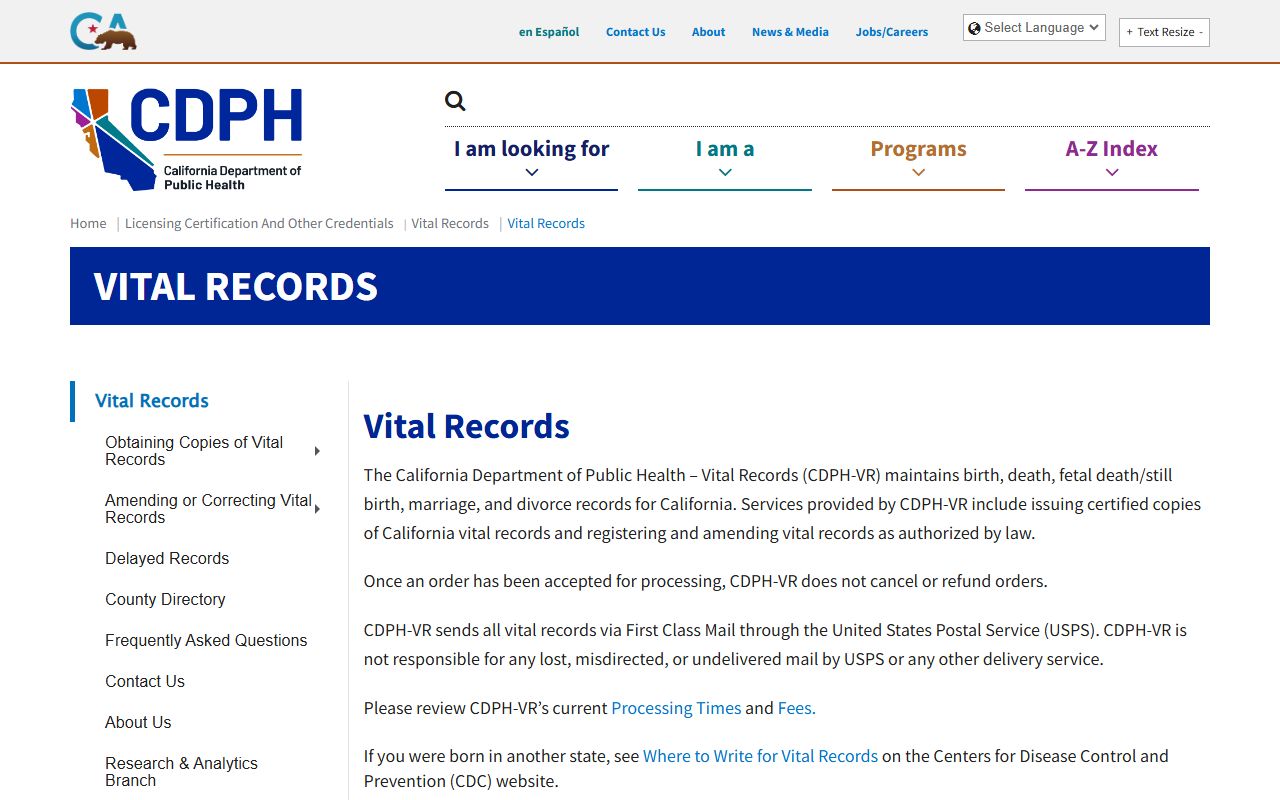
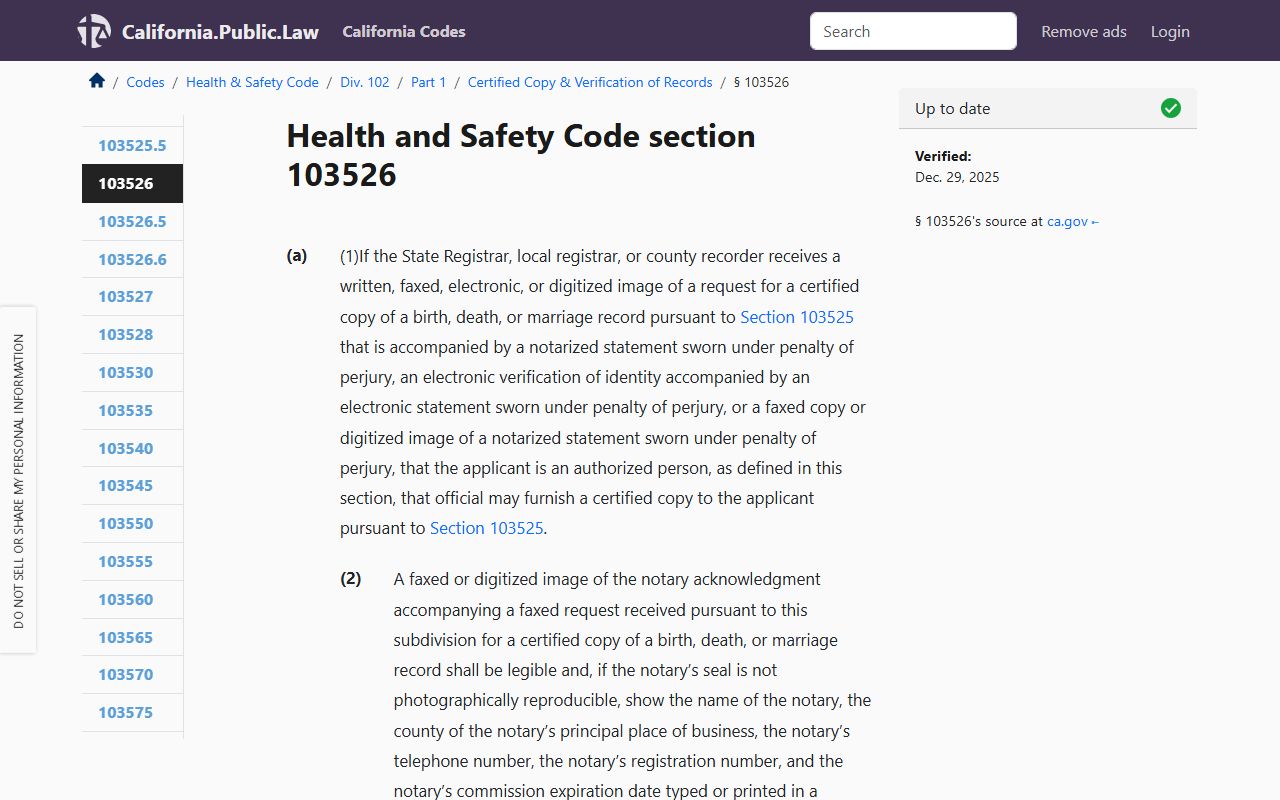
Genealogy researchers should request informational copies rather than certified copies. Informational copies cost the same but do not require notarized statements. They display a legend stating they cannot establish identity, which does not matter for family history research. Only close relatives can obtain certified copies without restrictions under California Health and Safety Code Section 103526.
California State Archives Genealogy Resources
The California State Archives holds one of the richest genealogy collections in the western United States. Their holdings include records from twenty eight counties with probate files, marriage records, birth and death certificates, and naturalization papers. These county collections fill gaps where local records were lost or damaged.
Census schedules from 1852, 1860, and 1880 provide snapshots of California families. Each entry lists names, ages, occupations, birthplaces, and last residences. The state archives also maintains military records from the 1850s through World War II. Prison registers from San Quentin and Folsom span 1850 to 1979. Mental health records exist for six state hospitals, though access restrictions apply to records less than seventy five years old.
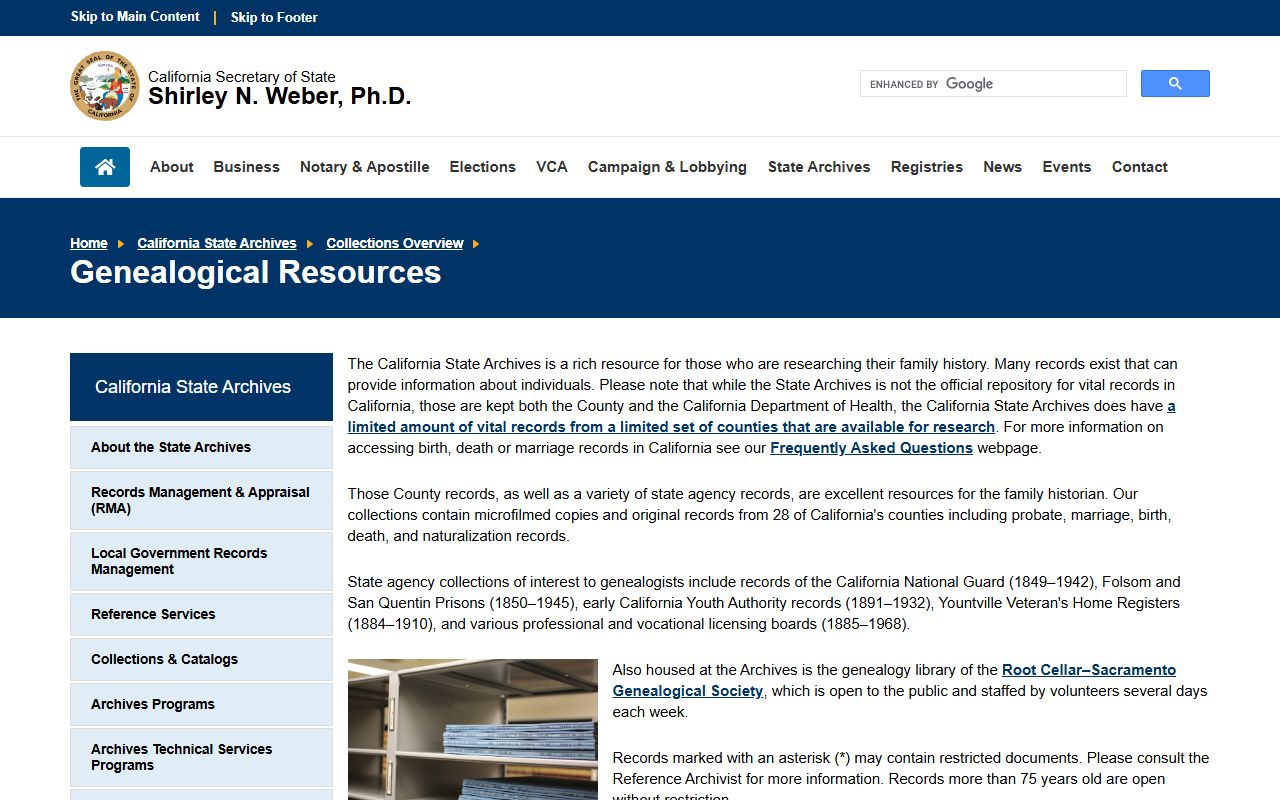
Court records at the state archives include Supreme and Appellate cases from 1850 to 1970. School reports, articles of incorporation, and trademark filings round out the collection. Researchers can visit the Sacramento reading room at 1500 11th Street or call 916-653-6814 for guidance on what records might help their search.
Sutro Library Genealogy Collection
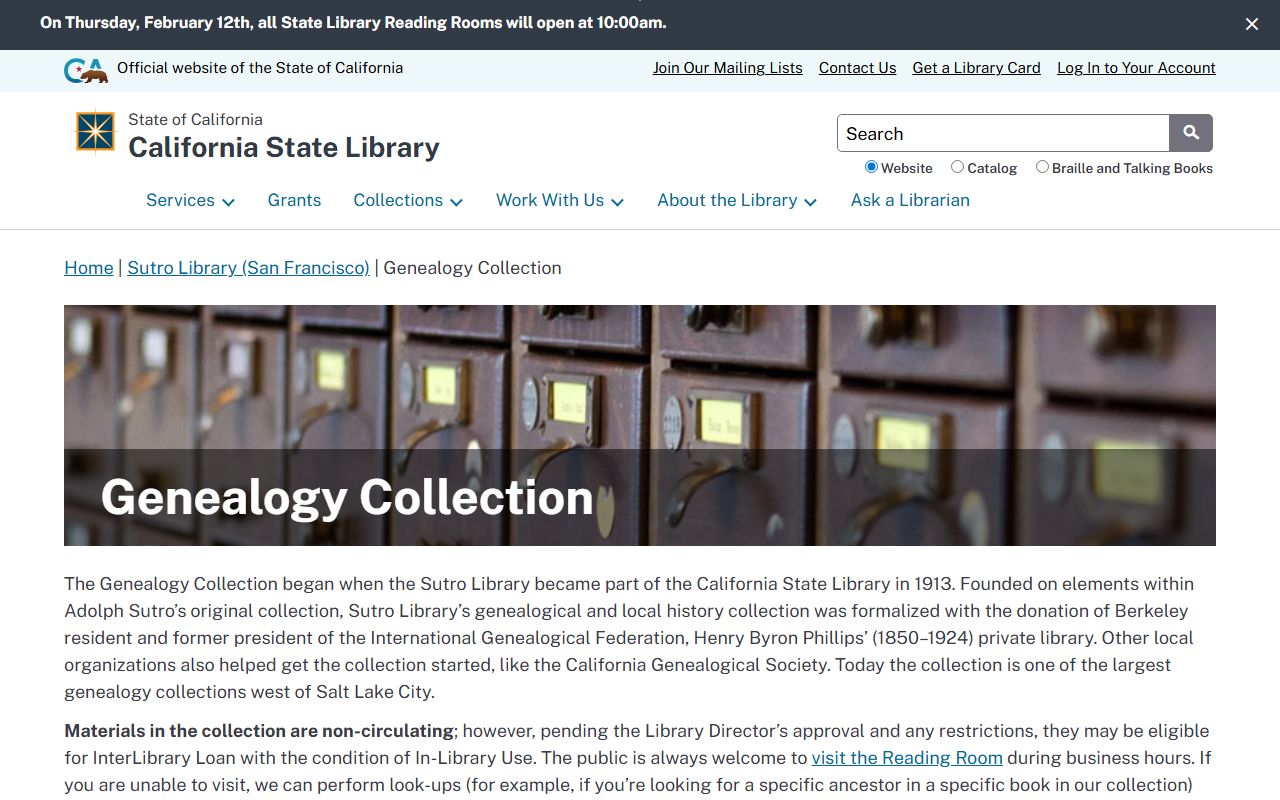
The Sutro Library houses the largest genealogy collection west of Salt Lake City. Located on the San Francisco State University campus, the library welcomes the public during its Tuesday through Thursday hours. The collection includes family histories, city directories, court abstracts, property record indexes, and genealogical society publications spanning multiple states and countries.
Telephone directories on microfiche cover the 1970s through 2000s for California communities. Staff will look up specific entries and scan pages at no charge if you cannot visit in person. They limit scans to ten percent of copyrighted works published after 1923 but will copy more from older materials. Email sutro@library.ca.gov with your research questions.
County Recorder Genealogy Records in California
Each of California's fifty eight counties maintains its own recorder office. These offices hold birth and death records for events that occurred locally, plus marriage licenses issued in that county. Some counties have records dating back to the 1850s when California achieved statehood. Others lost early records to fires, floods, or the 1906 San Francisco earthquake.
Pre-1905 vital records exist only at the county level. California had no statewide recording system before July 1905. County recorders also hold property deeds, probate files, and naturalization records that help trace family history. Many California counties now offer online record searches through their websites. Fees vary by county but typically run lower than state-level fees.
Visit the California Department of Public Health county registrars directory to find contact details for all fifty eight county recorder offices across the state.
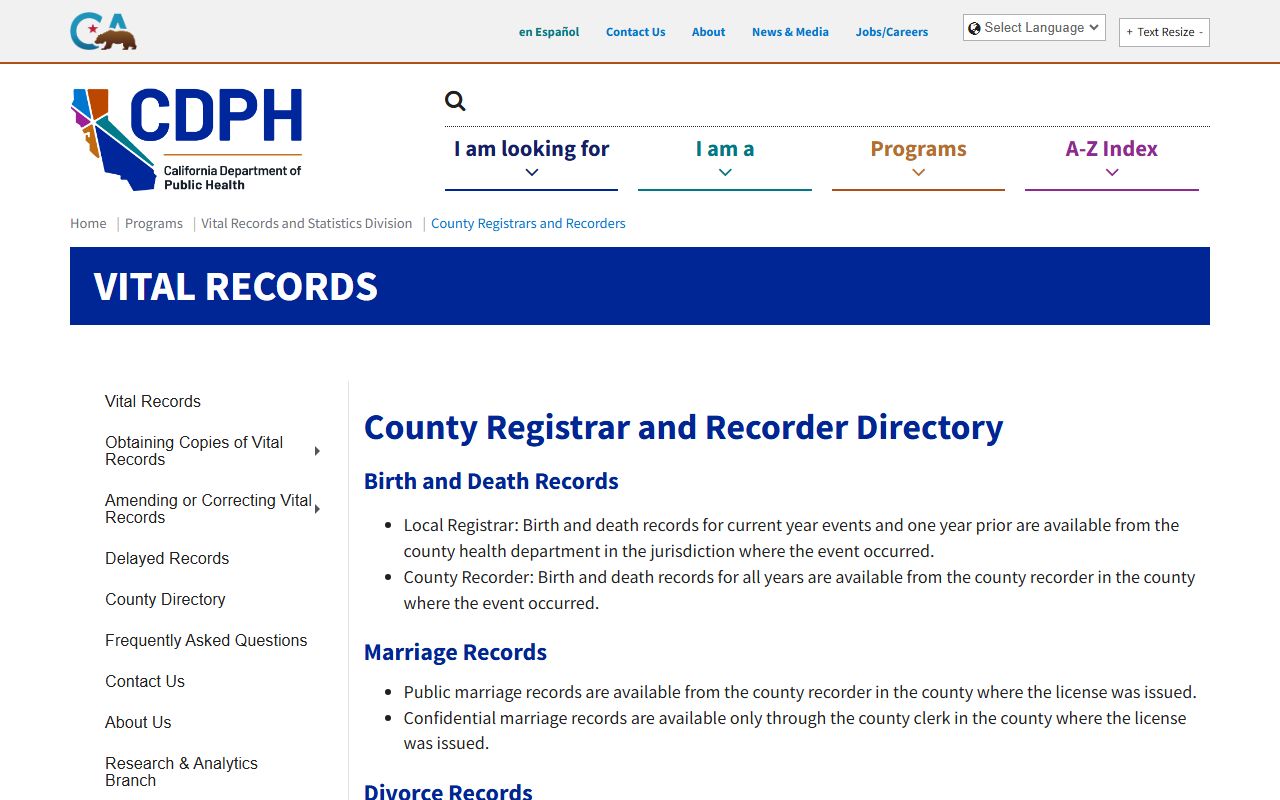
Note: Always contact the county where an event occurred, not where your ancestor lived at other times.
Free Online California Genealogy Databases
FamilySearch offers free access to millions of California genealogy records. The California Birth Index 1905-1995 contains over thirty three million entries. The California Death Index covers 1905 to 1939. A divorce index spans 1966 to 1984. County marriage records from 1850 to 1952 include thousands of licenses and certificates.
These databases provide index information only. You still need to order certificates from the state or county for complete details. The indexes help confirm that a record exists before you pay fees. Search by name, approximate date, and location to narrow results.
The California Digital Newspaper Collection at cdnc.ucr.edu has digitized newspapers from across California. Obituaries, marriage announcements, and local news items provide context for genealogy research. The Online Archive of California connects researchers with finding aids for archival collections at libraries and museums statewide.
California Genealogy Records Laws
California restricts access to recent vital records through privacy laws. Health and Safety Code Section 103526 defines who qualifies as an authorized person. Only the registrant, parents, children, grandchildren, siblings, spouses, and legal representatives can obtain certified copies for identity purposes. Genealogists who do not fit these categories receive informational copies instead.
Records over one hundred years old typically become public without restrictions. This means most genealogy records from before 1926 are now fully accessible. Marriage records have special rules for confidential marriages performed after 1971. These remain sealed except to the spouses or by court order.
Adoption records stay sealed under Family Code Section 9200. Adult adoptees age twenty one and older may access birth parent information if the parents provided written consent. Otherwise, a court petition showing exceptional circumstances is required. These strict rules protect privacy while allowing legitimate genealogy research to proceed through proper channels.
Tips for California Genealogy Research
Start with what you know. Write down names, dates, and places for your immediate family. Work backward one generation at a time. Do not skip ahead to search for distant ancestors until you have solid links through each generation. California records are vast but searching without focus wastes time and money.
Order informational copies for genealogy work. They cost the same as certified copies but require no notarized forms. Mail requests take longer than online orders. In person visits to county offices often provide same day service if the record is on file. Bring photo ID and know the exact details of the record you seek.
Check multiple sources for each ancestor. Birth records might list parents. Death certificates show birthplaces. Marriage licenses name both sets of parents. Probate files list all heirs. Census records place families in specific locations. Cross reference everything to build accurate family trees. Mistakes in one record might be corrected by another.
The 1906 San Francisco earthquake destroyed many records for the Bay Area. If your ancestors lived in San Francisco, Oakland, San Jose, or nearby cities, expect gaps in the records. Some people re-registered births after the earthquake, creating delayed certificates. Church records, newspaper archives, and cemetery records sometimes fill these gaps when official documents are missing.
California Vital Records Processing Times
State processing times vary by record type and date range. Recent birth and death records from 1905 to present take fifteen business days. Marriage records from 1998 to 1999 and 2010 to present take about one month. Some marriage years have longer delays. Records from 1949 to 1986 can take over six months to process.
The state no longer processes marriage requests from 1905 to 1948, 1987 to 1997, and 2000 to 2009. You must contact the county where the license was issued for those years. Divorce certificates from 1962 to June 1984 also take over six months. The state has no divorce records outside that narrow window.
County processing runs faster for most requests. Many counties mail certificates within two business days of receiving applications. In person requests often get same day service. Online ordering through county portals adds convenience but includes extra processing fees of five to twelve dollars on top of state fees.
Plan ahead when ordering genealogy records. Peak times in spring and summer can slow processing. Order well before you need documents for reunion events, heritage trips, or research deadlines. Keep copies of all applications and payment receipts in case questions arise about your order.
Browse California Genealogy Records by Location
Search by County
All fifty eight California counties maintain genealogy records. Start with the county where your ancestors lived or where vital events occurred. Each county page includes clerk-recorder contact details, office hours, fees, and local record availability.
Top counties for genealogy research: Los Angeles County, San Diego County, Orange County, Riverside County, San Bernardino County, Santa Clara County
View All 58 California Counties →
Search by City
Major California cities offer additional genealogy resources through public libraries, historical societies, and local archives. While vital records are kept at the county level, cities provide access to newspapers, city directories, cemetery records, and special collections.
Largest cities for research: Los Angeles, San Diego, San Jose, San Francisco, Fresno