
Visalia Genealogy and Family Records
Visalia genealogy records trace families through vital documents kept by Tulare County offices in the county civic center. Birth certificates, death records, and marriage licenses for Visalia residents get filed with Tulare County Assessor-County Clerk-Recorder since Visalia serves as the county seat of Tulare County. Founded in 1852 as one of California's first inland towns, Visalia has deep agricultural roots in the San Joaquin Valley with families who farmed wheat, cattle, cotton, citrus, and diverse crops. Local libraries, historical societies, and regional archives preserve documents about pioneer families, immigrant communities, and the generations who built this Central Valley city from a frontier settlement into the largest city between Fresno and Bakersfield.
Visalia Genealogy Quick Facts
Tulare County Vital Records Office
Tulare County maintains all vital records for Visalia at the Assessor-County Clerk-Recorder office in the county civic center. As county seat, Visalia hosts the main office handling birth and death certificates plus marriage licenses for all Tulare County residents. The office serves cities and unincorporated areas throughout the county.
Birth certificates cost thirty one dollars per copy. Death records are twenty six dollars. Marriage certificates run nineteen dollars. These fees match California state law requirements. The Tulare County Clerk-Recorder provides information on their website about ordering processes. Processing typically takes two weeks for mail requests.
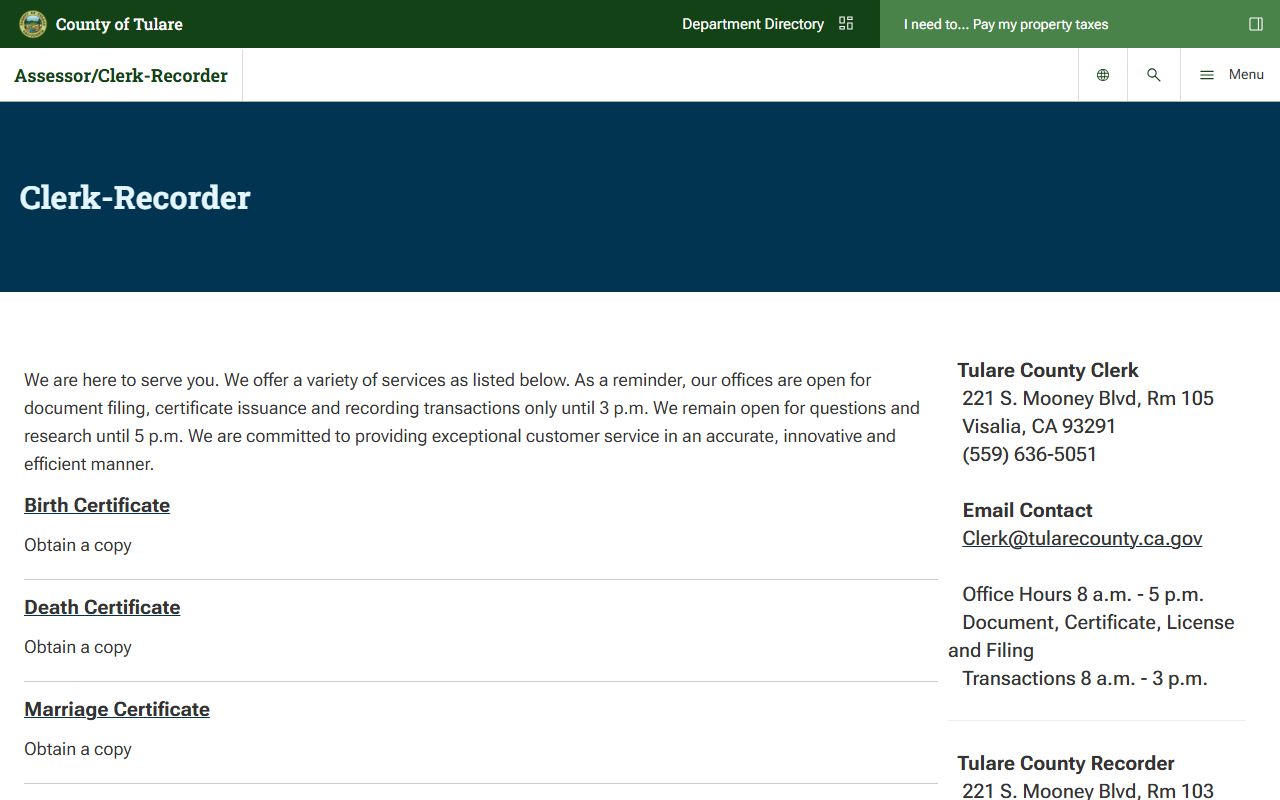
Tulare County records begin in 1852 when the county was formed. Visalia was established the same year as the county seat. The city has continuous records dating back over one hundred seventy years making it an excellent location for genealogy research. Early records document pioneer families who settled the San Joaquin Valley when California was newly admitted to the Union.
For genealogy research, request informational copies instead of certified copies. Informational copies contain identical information but do not require notarized statements. They cost the same amount. Only authorized persons under California Health and Safety Code Section 103526 can obtain certified copies for legal identity purposes.
Visalia Library Genealogy Collections
The Tulare County Library system serves genealogy researchers through multiple locations. The main branch in downtown Visalia provides reference materials for family history research. Staff can guide patrons toward county offices and online databases. Library computers offer free access to subscription genealogy websites.
City directories from different decades list Visalia residents by name, address, and occupation. Phone books supplement directory information. These sources help track families through address changes and job shifts over the years. Local history books document Visalia's development from frontier town to agricultural center to modern city.
Newspaper archives include the Visalia Times-Delta and earlier publications dating back to the 1850s. Obituaries, wedding announcements, and local news provide family history details. The newspaper morgue contains decades of coverage documenting Visalia and Tulare County. Digital databases supplement microfilm holdings.
Note: Census records show Visalia families from 1860 forward when the first complete California census was taken.
Tulare County Historical Society
The Tulare County Historical Society preserves local heritage through the Tulare County Museum and research archives. Collections include documents, photographs, and artifacts about families who settled the region. The museum operates in Mooney Grove Park with exhibits and research facilities for genealogy inquiries.
Pioneer family files contain genealogies, newspaper clippings, and biographical information. Cemetery records from area burial grounds help trace family connections. Visalia Cemetery and other local graveyards have burials dating back to the 1850s. Burial registers list dates, ages, and family details.
Early Visalia served as a supply center for mining camps in the Sierra Nevada foothills. Later the city became a major agricultural hub. Many families farmed or operated businesses serving farmers. Business records, property documents, and personal papers donated by families fill the archives. Researchers can access materials by appointment.
Agricultural Records and Resources
The San Joaquin Valley's rich soil made Tulare County one of California's most productive agricultural regions. Many families worked in farming, ranching, or related industries for generations. Employment records, farm labor documents, and agricultural organization files help trace family history.
Property records document land ownership from the 1850s forward. The Tulare County Recorder maintains deed indexes showing who owned farms and ranch land. Many pioneer families acquired large holdings that later divided among heirs. Following property through deed records traces family relationships and economic changes.
Water rights records are crucial in this agricultural region. Irrigation districts, water companies, and court cases over water access document who controlled this vital resource. The Kings River and Kaweah River systems provided water for crops. Many legal disputes over water involved family members or neighboring landowners.
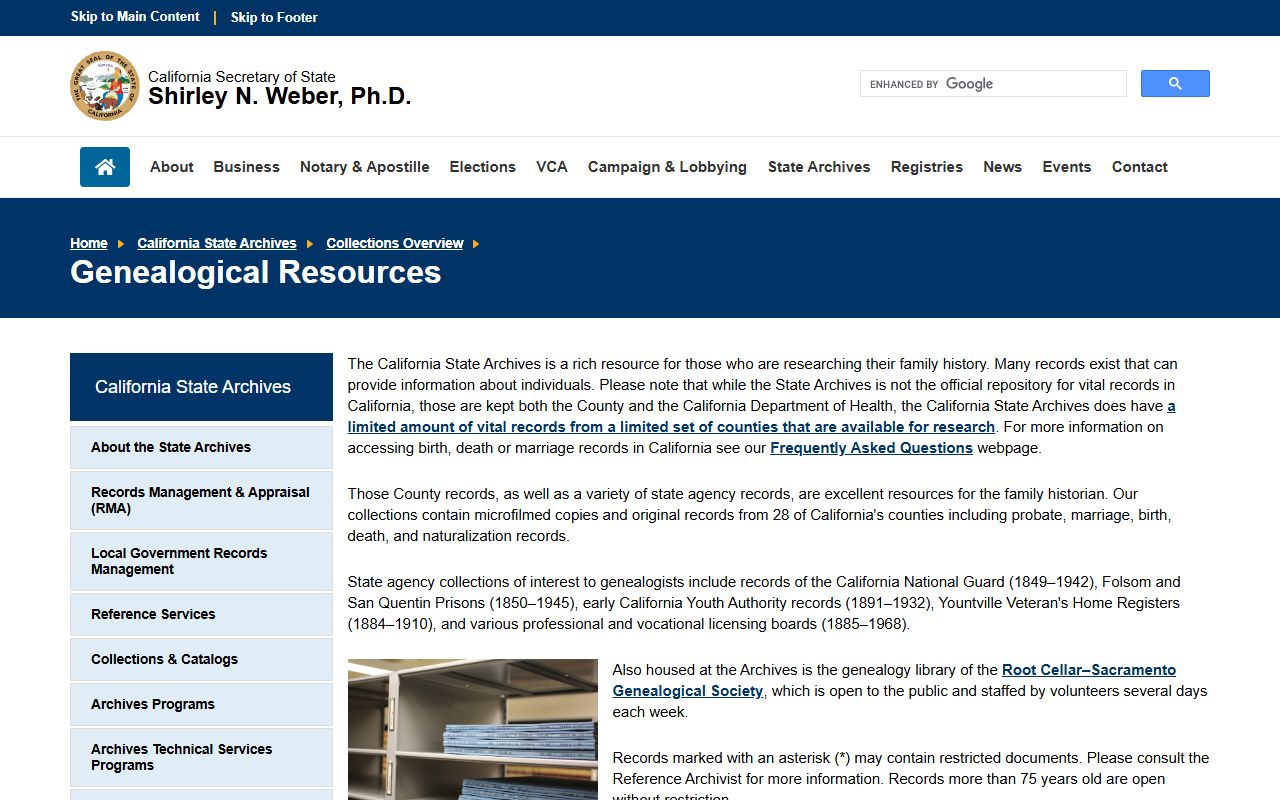
The California State Archives holds Tulare County materials including court records and land files. Census agricultural schedules from 1850 to 1880 list farmers and their production. These records show what families grew and how much livestock they kept.
Sierra Nevada Foothill Records
Visalia served as gateway to the Sierra Nevada with Sequoia National Park and Kings Canyon nearby. Many families had connections to mountain communities, logging camps, and early tourism. Park service records, forest service files, and business documents from mountain resorts help trace these connections.
Mining activity in the foothills brought prospectors and workers through Visalia. Mining claim records, assayer reports, and mineral rights documents may mention family members who worked in gold or silver mining. Many miners later settled in Visalia or surrounding valley communities after leaving the mines.
The National Archives holds some federal records related to national parks and forests. Employment records for park rangers and forest service workers may provide genealogy information. Contact the National Archives at San Francisco for guidance on what records they maintain.
Online Genealogy Databases
FamilySearch provides free California vital record indexes. The California Birth Index 1905-1995 includes Tulare County births. Search by name and approximate date to confirm records exist before ordering copies. The index shows basic information but not complete certificate details.
Ancestry.com hosts census records, city directories, and newspapers for Tulare County. Federal census records from 1850 to 1950 are searchable showing household members and details. Agricultural schedules list farm production. Many libraries provide free Ancestry access on public computers. Check with local libraries about database availability.
The California Digital Newspaper Collection at cdnc.ucr.edu includes Visalia newspapers. Search for family names to find obituaries, wedding announcements, and articles. The collection continues to expand as more papers get digitized. It provides convenient access to historical newspapers.
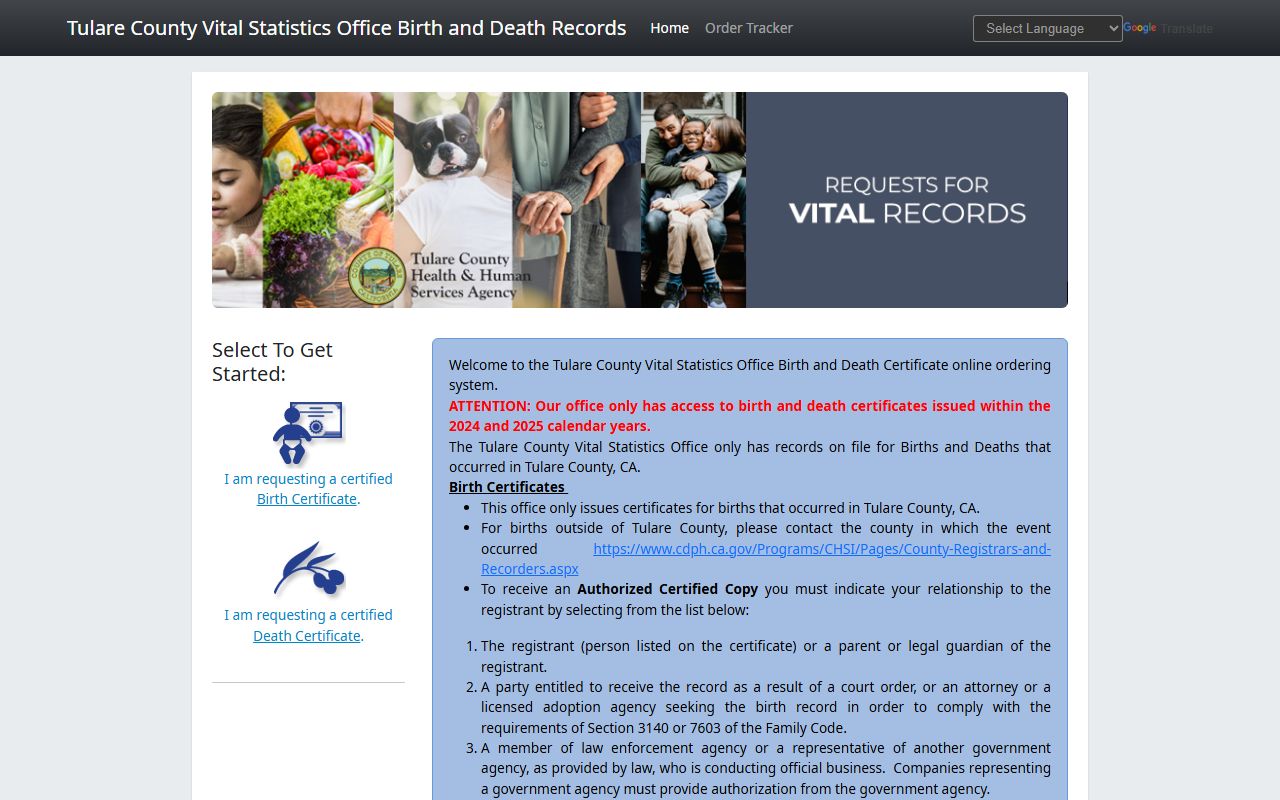
Tulare County offers online ordering for some vital records through their portal. Additional processing fees apply for online orders. This provides convenience for researchers who cannot visit the office in person or prefer not to mail applications.
Visalia Genealogy Research Tips
Begin with living relatives to gather family information. Interview older family members who remember previous generations. Write down all names, dates, places, and stories. Even approximate information helps. Small details often prove crucial later. Focus on one generation at a time working backward from present to past.
Order multiple types of vital records for each ancestor. Birth certificates list parents and birthplaces. Death records show burial locations and informants. Marriage licenses name both families. Each document provides different details. Cross reference multiple sources to verify facts and catch recording errors.
Use census records to track families every ten years. Census listings place people in specific locations at specific times. They show ages, birthplaces, occupations, and household members. The 1940 census is the most recent public census showing Visalia during World War II. Many residents worked in agriculture or related industries.
Property records document land ownership. Many Visalia families owned farms or ranch land. Deeds, mortgages, and tax files create paper trails showing purchases, sales, and transfers. Probate files list heirs when estates settled. These records reveal family relationships and economic circumstances that shaped family decisions.
Nearby Research Locations
Fresno sits north in Fresno County with excellent genealogy resources including the Heritage and Genealogy Center. Hanford in Kings County borders Tulare County to the west. Both cities offer research facilities and historical collections.
Bakersfield in Kern County is the major city south of Visalia. Many families moved between valley communities following agricultural work. Regional research helps trace families across multiple Central Valley counties.