
Trinity County Vital Records and Genealogy
Genealogy records in Trinity County document families in California's remote northwestern mountains since 1850. The County Clerk-Recorder in Weaverville maintains vital records for births, deaths, and marriages occurring in this rugged region. With only about 13,000 residents spread across 3,208 square miles, Trinity is one of California's least populated counties. Records from Gold Rush mining camps through modern times trace pioneers who worked placer mines and mountain timber operations. Researchers can access genealogy records through the historic Weaverville courthouse, mail requests, or online systems. Early records are sparse due to the transient mining population and voluntary registration before 1915.
Trinity County Quick Facts
Trinity County Clerk-Recorder Office
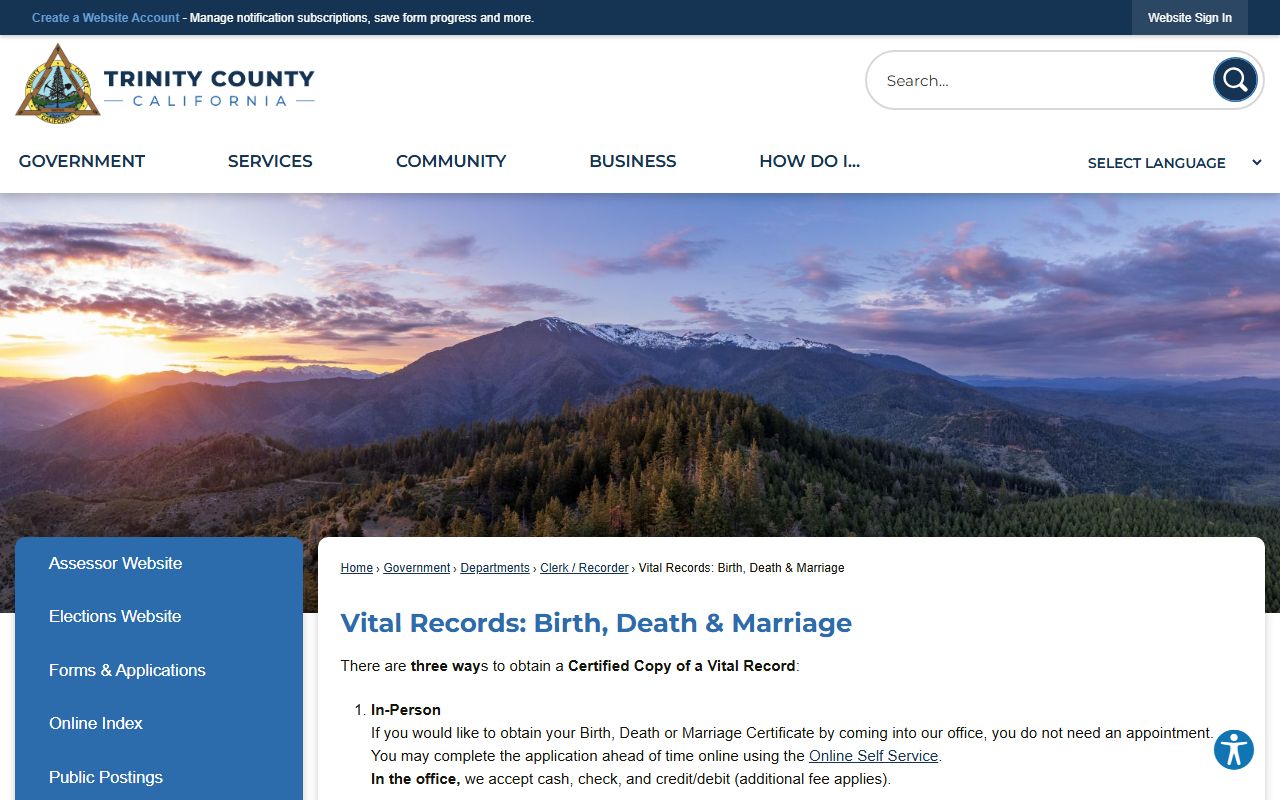
The Trinity County Clerk-Recorder serves as the primary source for genealogy records. This office keeps birth and death certificates for events in the county and marriage records for licenses issued here. The recorder operates from the historic Weaverville courthouse, one of California's oldest government buildings still in use.
Records date back to 1850 when Trinity County was established as one of California's original twenty seven counties. Gold discoveries brought miners flooding into Trinity River valleys. Many stayed only briefly, leaving few records. Early vital records are sparse since California had no statewide system until 1905 and did not require registration until 1915. Genealogy researchers should expect significant gaps in records from mining camp days.
| Address |
11 Court Street Weaverville, CA 96093 |
|---|---|
| Phone | (530) 623-1215 |
| Hours | Monday through Friday, 9:00 AM to 4:00 PM |
| hhiggins@trinitycounty.org |
Staff can search paper records and microfilm for genealogy purposes. The small office provides personalized service. Call ahead if you plan to visit since winter weather can make mountain roads difficult. Mail and online requests provide alternatives to in-person visits to this remote location.
Birth, Death, and Marriage Certificates
Birth certificates show a child's name, birth date and place, parents' names and ages, and other family information. Death records include the deceased person's name, death date, age, birthplace, parents' names, and usually cause of death. Marriage records show both spouses with marriage date and location. These vital records help genealogy researchers trace family lines in Trinity County.
Current fees are thirty one dollars for birth certificates, twenty six dollars for death certificates, and nineteen dollars for marriage certificates. These prices cover one certified copy. Genealogy researchers should request informational copies rather than certified copies. Informational copies work for family history and do not require notarized statements. Both copy types cost the same.
To order a record, provide the person's full name, date of the event, and location within Trinity County. Mining camp names help for early records. Additional details speed searches. Birth and death records take about three weeks to become available after the event is registered. Historical records are already on file.
The California Birth Index 1905-1995 provides free access to state birth indexes. Use this to verify a Trinity County birth occurred before ordering certificates. The index shows names, dates, and counties but not full certificate details.
How to Get Trinity County Genealogy Records
Three methods exist to obtain vital records from Trinity County. Visit the Weaverville office during business hours. Bring photo ID and details about the record you want. Staff will search their systems and make copies if they find a match. In-person visits provide an opportunity to see the historic courthouse.
Mail requests work well for this remote county. Download application forms from the county website or call to have them mailed to you. Fill out forms completely with all known information. Include payment by check or money order. Send to the Weaverville address. Processing takes one to two weeks once the county receives your request.
Online ordering through authorized vendors provides convenience for genealogy researchers. VitalChek and similar services accept credit cards and mail certificates. These vendors charge processing fees on top of county fees. Only use vendors linked from the official Trinity County website. The county keeps fees even if no record is found since fees cover search costs.
Trinity County Genealogy Resources
The Trinity County Historical Society maintains archives and a museum in Weaverville. Their collection includes photographs, mining records, and documents about Gold Rush families. The society focuses on pioneer history and can help genealogy researchers find information about early Trinity County settlers and mining camp residents.
The Joss House State Historic Park in Weaverville preserves Chinese temple records and artifacts. Chinese miners formed a significant part of Trinity County's Gold Rush population. The park archives may help researchers tracing Chinese immigrant families who worked placer mines along Trinity River.
Cemetery records provide valuable genealogy information. Trinity County has many small cemeteries scattered across the mountains and valleys. The Weaverville Cemetery dates to Gold Rush times. Find A Grave indexes many local burials but coverage is incomplete for remote areas. Physical cemetery visits can reveal family information not captured online.
The California State Archives in Sacramento holds some Trinity County records. Their collection includes county records transferred to state custody. Visit the archives or contact staff to learn what Trinity County materials they have for genealogy research.
Trinity County Gold Rush History
Trinity County was one of California's original twenty seven counties in 1850. Gold discoveries along the Trinity River in 1848 and 1849 brought thousands of miners. Weaverville became the main supply center and county seat. At its peak in the 1850s, the county had over 10,000 residents. Mining camps filled every creek valley with colorful names that survive today.
The population was highly transient. Most miners stayed only a season or two before moving on. Few families settled permanently in pioneer times. Chinese immigrants worked claims abandoned by white miners. They formed organized communities with businesses, temples, and social structures. This diversity makes Trinity County genealogy research challenging but rewarding.
As placer gold was exhausted, hard rock mining continued into the early 1900s. Timber operations supplemented the economy. Population declined steadily from Gold Rush peaks. By 1900, fewer than 4,000 people remained. Modern Trinity County has similar population levels with an economy based on tourism, timber, and small-scale marijuana cultivation.
The remote location preserved some historical sites but made record keeping difficult. Fires destroyed parts of early Weaverville. Some records were lost. The surviving genealogy records are precious sources for researchers tracing Trinity County ancestors through mining camp days to modern times.
Tips for Trinity County Genealogy Research
Start with mining camp names and locations. Trinity County is large and remote. Knowing specific places helps narrow searches. Many pioneers moved frequently between camps. Check neighboring counties like Shasta, Humboldt, and Siskiyou if Trinity County records are missing.
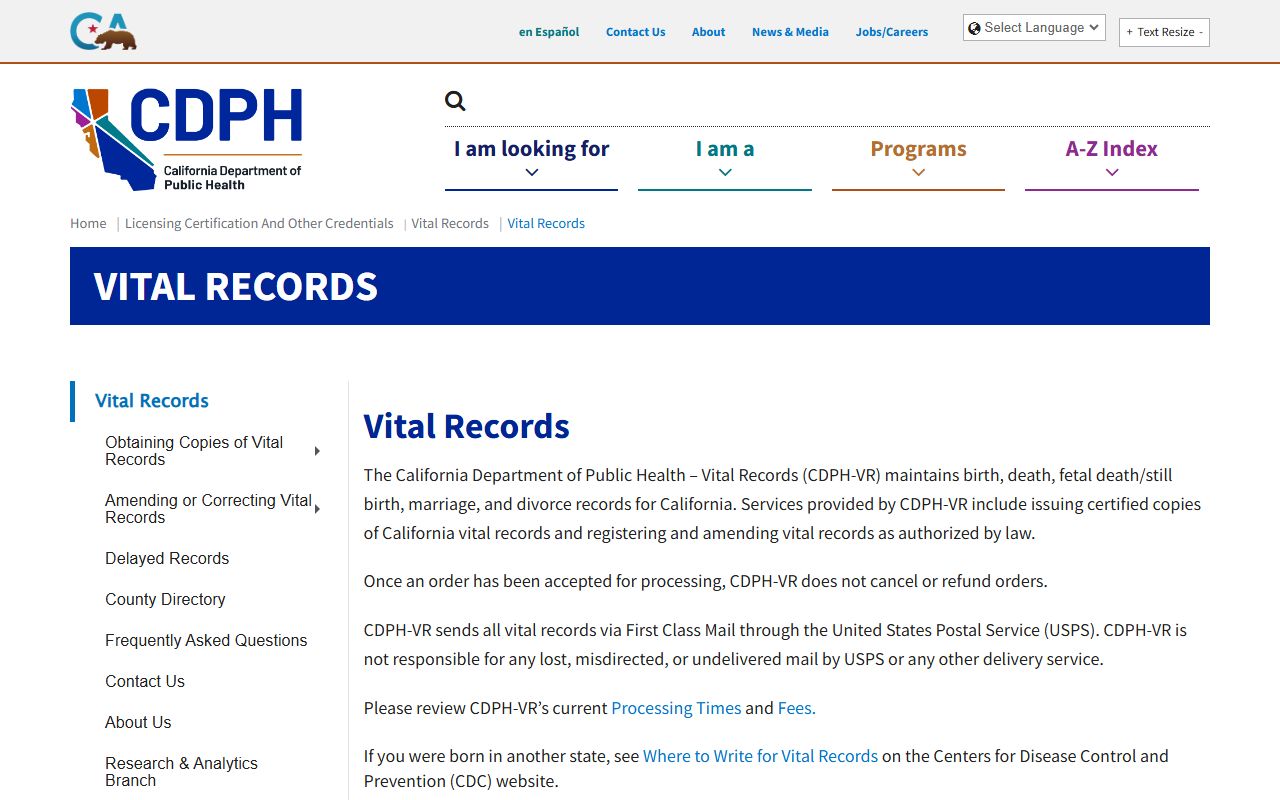
Check both county and state sources. The California Department of Public Health has records from 1905 forward. Trinity County has some earlier records. If one source fails, try the other. Different filing systems mean one might have what the other lacks for genealogy research.
Use newspapers for gaps in vital records. The California Digital Newspaper Collection includes some northern California newspapers that covered Trinity County mining news. Obituaries and local notices provide family details not found in official records. Nearby county newspapers sometimes reported Trinity County events.
Consider mining records and claims. The California Health and Safety Code Section 103526 governs vital records access. Bureau of Land Management records document mining claims. These help place ancestors in specific locations. Census records track family movements between mining areas over time.