
San Bernardino Genealogy Records and Research
San Bernardino genealogy records help trace family histories in this Inland Empire county seat. Vital records for San Bernardino births, deaths, and marriages are maintained by county offices located in the city. As the county seat, San Bernardino houses the main recorder and clerk offices plus extensive historical archives documenting the region from Spanish colonial times forward. You can research ancestors through county vital records, San Bernardino County Archives, public library genealogy collections, and historical societies. The city's position on historic Route 66 and its railroad heritage created diverse populations with extensive documentation. Many San Bernardino genealogy records are accessible online while others require visits to county offices, archives, or libraries. Church records, cemetery records, and newspapers supplement official vital records to build complete family histories for this historic California city.
San Bernardino Genealogy Facts
San Bernardino County Vital Records
San Bernardino vital records are held by San Bernardino County offices. Birth and death certificates for events in San Bernardino come from the county recorder. Marriage licenses issued in San Bernardino County are filed with the county clerk. These main county offices are conveniently located in downtown San Bernardino.
The San Bernardino County Assessor Recorder County Clerk processes vital records for the entire county. You can order online, visit offices in person, or mail applications. Birth certificates cost thirty one dollars. Death records are twenty six dollars each. Marriage certificates run nineteen dollars per copy as of 2026.
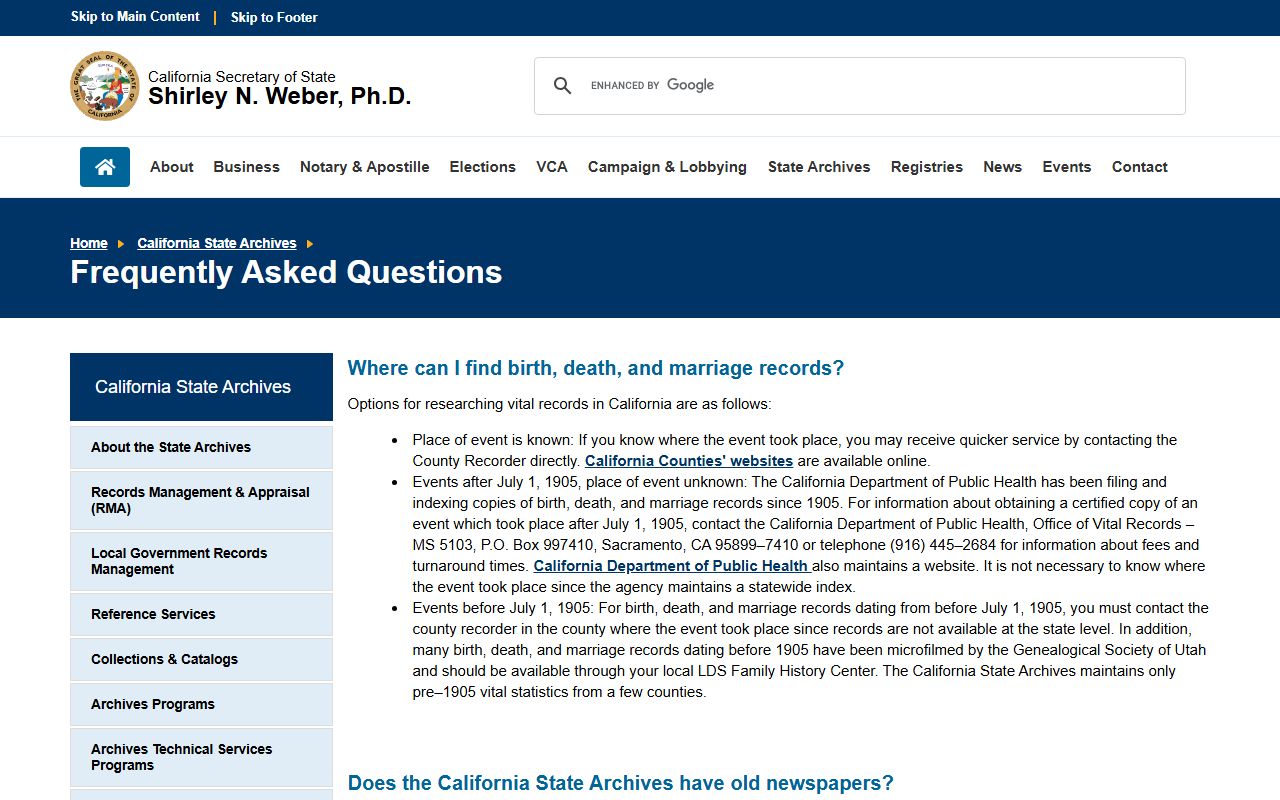
San Bernardino County records begin in 1850 when the county was established as one of California's original counties. Pre-1905 vital records exist only at the county level since California had no statewide system before that date. Registration became mandatory in 1915, so earlier records may have gaps. Check church registers and cemetery records when official vital records are missing.
County offices provide in person service during business hours. Same day processing is often available for walk-in requests when records are readily accessible. Online ordering adds convenience but includes processing fees. Mail requests depend on postal delivery times plus county processing.
San Bernardino County Historical Archives
The San Bernardino County Archives houses one of Southern California's premier genealogy collections. Holdings include county government records, naturalization papers, probate files, land records, and historical documents dating back to the 1850s. These materials supplement vital certificates with extensive family details.
Naturalization records document when immigrants became citizens. Many San Bernardino residents came from Mexico, China, Italy, and other countries. Naturalization papers list birth dates, birthplaces, arrival dates, and sometimes family members' names. These records help trace families back to their countries of origin.
Probate files created after deaths list heirs, property, and family relationships. If your San Bernardino ancestor owned property or left an estate, probate records might contain genealogy information not found in vital records. Property deeds and land transactions trace ownership through time showing when families bought or sold land.
The archives also maintains historical photograph collections, maps, school records, and documents from civic organizations. Researchers can access these materials during regular hours. Staff can guide you to relevant collections and explain access procedures for different record types.
Spanish Colonial and Mexican Era Records
San Bernardino has roots in Spanish colonization and Mexican rancho periods. Mission San Gabriel and other regional missions kept registers of baptisms, marriages, and burials from the 1700s and early 1800s. These early church records document Native American and Spanish colonial families in the area.
Mexican land grant records trace rancho ownership before American statehood. The Rancho San Bernardino land grant and subsequent subdivisions created the foundation for later settlement. Land grant case files include genealogy details about early landowners and their families. These records are held at various repositories including the Bancroft Library and National Archives.
Early settlers who arrived during the Mormon colony period in the 1850s have documentation through Church of Jesus Christ of Latter-day Saints records. The Mormon Battalion and early San Bernardino colony members appear in church records, journals, and compiled histories. These sources supplement civil records for families who settled San Bernardino in its earliest days.
San Bernardino Library Genealogy Collections
Norman F. Feldheym Central Library provides extensive genealogy resources. The library subscribes to Ancestry.com and other major genealogy databases for free in library use. Staff assist researchers with California resources and San Bernardino specific materials.
Local history collections include San Bernardino city directories from the late 1800s onward. These annual publications list residents by name with addresses and occupations. Directories track families through different neighborhoods over decades. Combined with census records, they show how families changed and moved.
The library maintains microfilmed San Bernardino newspapers dating back over a century. The San Bernardino Sun and earlier publications documented births, marriages, deaths, and daily life. Obituaries list family members and burial locations. Wedding announcements name both families. Birth notices appear in social columns.
Special collections include materials about San Bernardino ethnic communities, Route 66 history, citrus industry heritage, and regional development. These collections provide context for genealogy research showing where ancestors lived and worked. The library also offers interlibrary loan access to materials from other institutions.
San Bernardino Route 66 and Transportation History
San Bernardino's location on historic Route 66 and its position as a railroad center shaped the city's development. Many families came to San Bernardino because of transportation jobs or businesses serving travelers. This heritage created unique genealogy documentation.
Railroad employment records list workers with dates and positions. Santa Fe and Southern Pacific railroads employed hundreds of San Bernardino residents. Union records and company documents mention workers by name. Check archives and historical societies for materials about railroad families.
Route 66 business records document families who operated motels, restaurants, gas stations, and other establishments. City directories list these businesses with owner names. Photographs show Route 66 era San Bernardino. Historical societies preserve materials about businesses and families connected to the famous highway.
Online Genealogy Databases for San Bernardino
FamilySearch provides free California vital records indexes. The California Birth Index 1905-1995 includes San Bernardino births. The California Death Index covers 1905 to 1939. These databases help verify records exist before ordering copies from the county.
The California Digital Newspaper Collection includes digitized San Bernardino newspapers. Search for family names to find obituaries, wedding announcements, and local news. The San Bernardino Sun documented city events for decades. Newspaper archives provide details not captured in vital records.
Census records available through genealogy sites show San Bernardino families in different years. The 1860 through 1940 censuses all include San Bernardino. These records list household members with ages, birthplaces, occupations, and relationships. Census data combined with vital records builds complete family timelines.
San Bernardino Cemetery and Burial Records
Cemetery records supplement vital certificates with burial details and family information. Pioneer Memorial Cemetery and other San Bernardino burial grounds maintain records with dates and plot locations. Contact cemeteries to search for specific individuals or request burial information.
Tombstone inscriptions provide dates and relationships. Walking cemetery grounds and photographing markers helps document families. Many stones include birth dates, death dates, and family connections not easily found elsewhere. Some list birthplaces, military service, or organizational memberships.
Online burial databases like Find A Grave include San Bernardino cemetery transcriptions. Volunteers have photographed and indexed thousands of markers. These searchable databases help locate specific burials and sometimes include biographical information and family photographs contributed by researchers.
San Bernardino Family History Research Strategies
Begin with San Bernardino County vital records for births, deaths, and marriages. County offices are conveniently located in downtown San Bernardino. Then visit the county archives which holds extensive historical collections. Library resources including newspapers and city directories add more details. Multiple sources build complete family pictures.
Consider San Bernardino's long history when researching families. Early settlers from the Mormon colony period, Spanish colonial families, and later arrivals all require different research approaches. Understanding when ancestors arrived helps direct research to appropriate sources from that era.
Use city directories and census records together to track families through San Bernardino neighborhoods. The city has distinct areas that developed in different periods. Following families through addresses shows migration patterns and economic changes. Property records show land ownership for families who bought homes or businesses.
Connect with San Bernardino County genealogy groups and historical societies. They maintain compiled research, cemetery transcriptions, photograph collections, and local knowledge. Experienced researchers familiar with the area can guide you through challenges specific to San Bernardino genealogy research.